Precision tools,
built solo.

Three years of C++, computer vision, and low-level Windows work. Custom-trained detection models, hardware-level automation, real-time GPU inference. Small commissions, long threads, honest scopes.

See the work
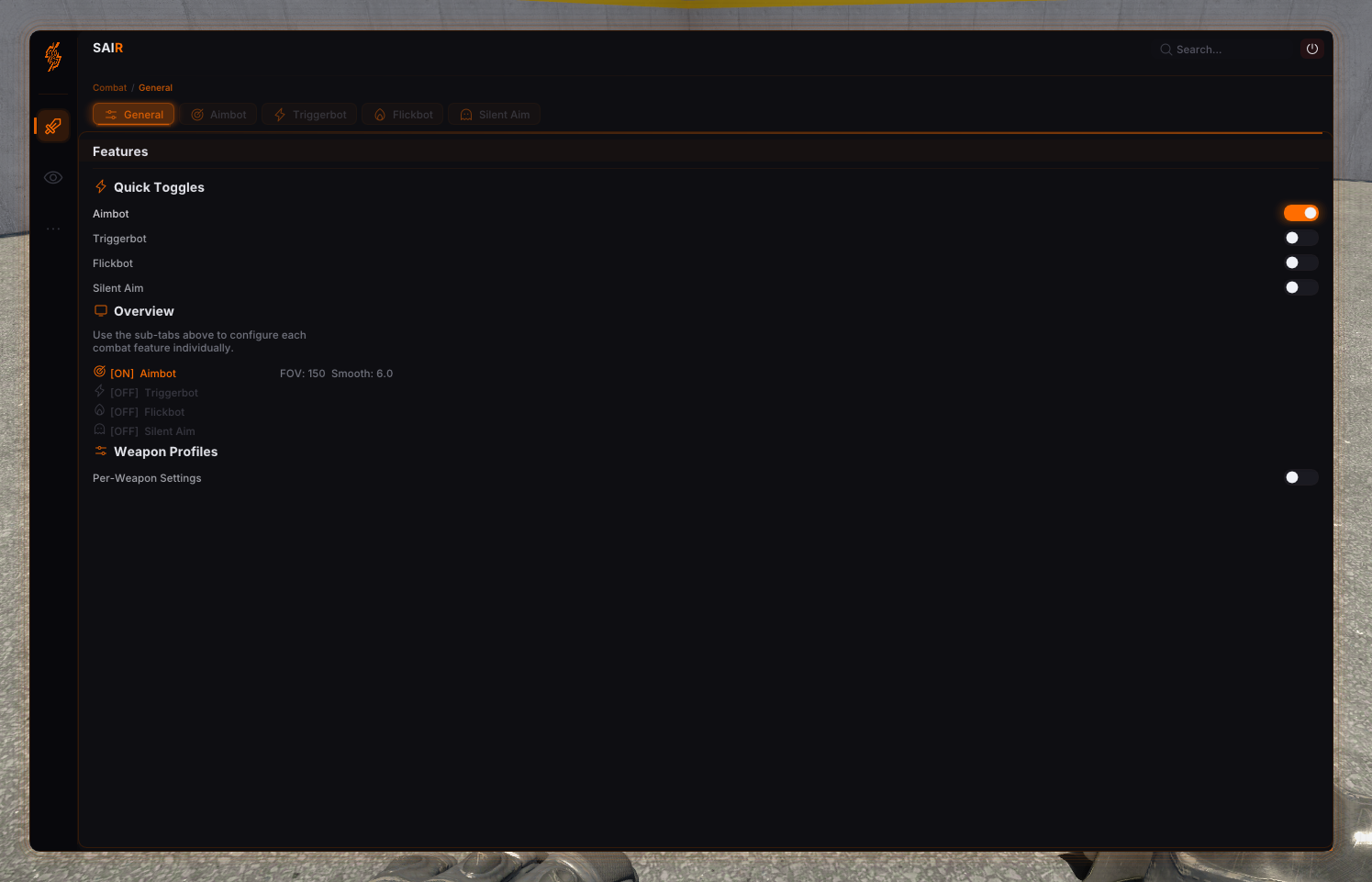
Sair, an external overlay for Counter-Strike 2, showing the in-game menu
Sair, CS2 external overlay C++17, shipped April 2026

Selected work.

Every project below started as a stubborn personal itch and ended as a build that runs. No frameworks of the week, no half-finished side quests.

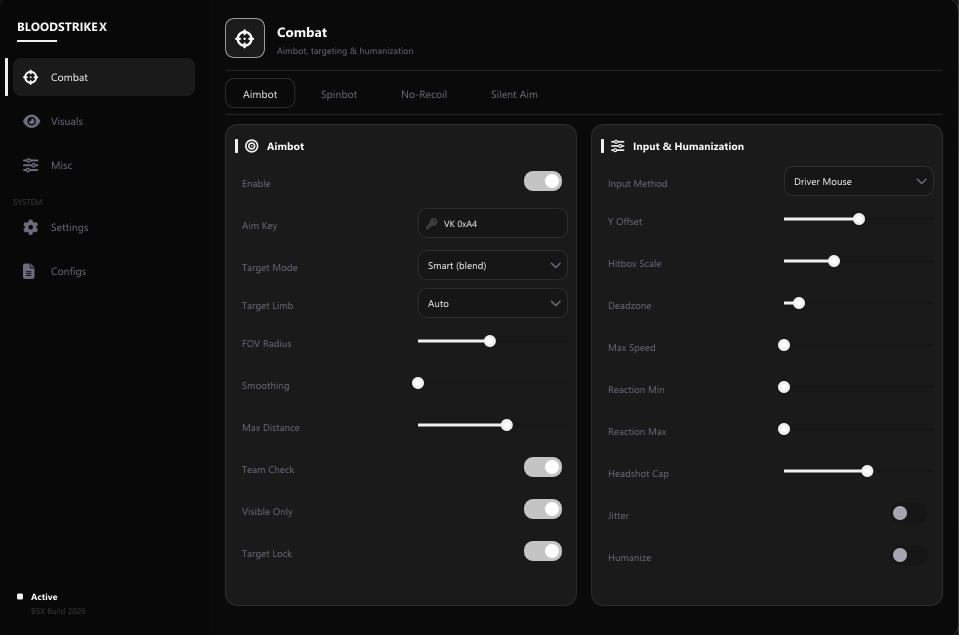
Arbiter, a private Overwatch 2 external.

The largest thing I've been part of. A commercial external for Overwatch 2, built for a private buyer alongside the lead engineer. Under active development.

Under NDA — visuals stay confidential until sale.

Read case
  1. Shipped April 2026

    Sair, CS2 external

    A full external for Counter-Strike 2. Read-only memory, hardware-input automation, a custom ImGui overlay, and four-tier anti-analysis. Combat, visuals, utility, security. One binary, one author.

    C++17DirectX 11ImGuiAnti-Debug
    Read case →
  2. Shipped 2026

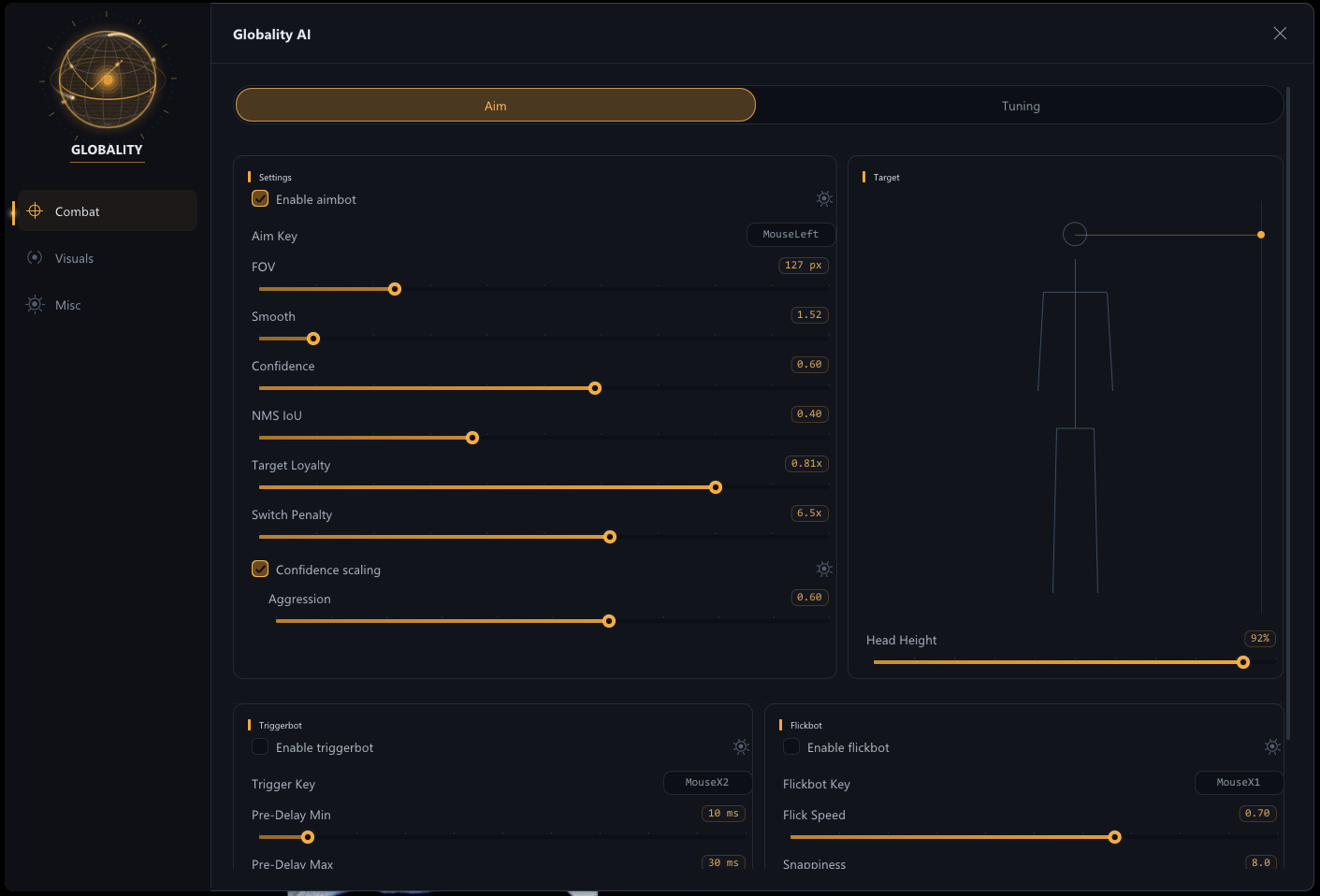
    Globality AI, Neural Vision

    A computer-vision successor to the original colour detector. Hand-tuned heuristics replaced by a custom-trained neural model, real-time GPU inference, fed by an in-house capture pipeline.

    C++17HIP / ROCmAMD RDNA4CV
    Read case →
  3. 2025 — available

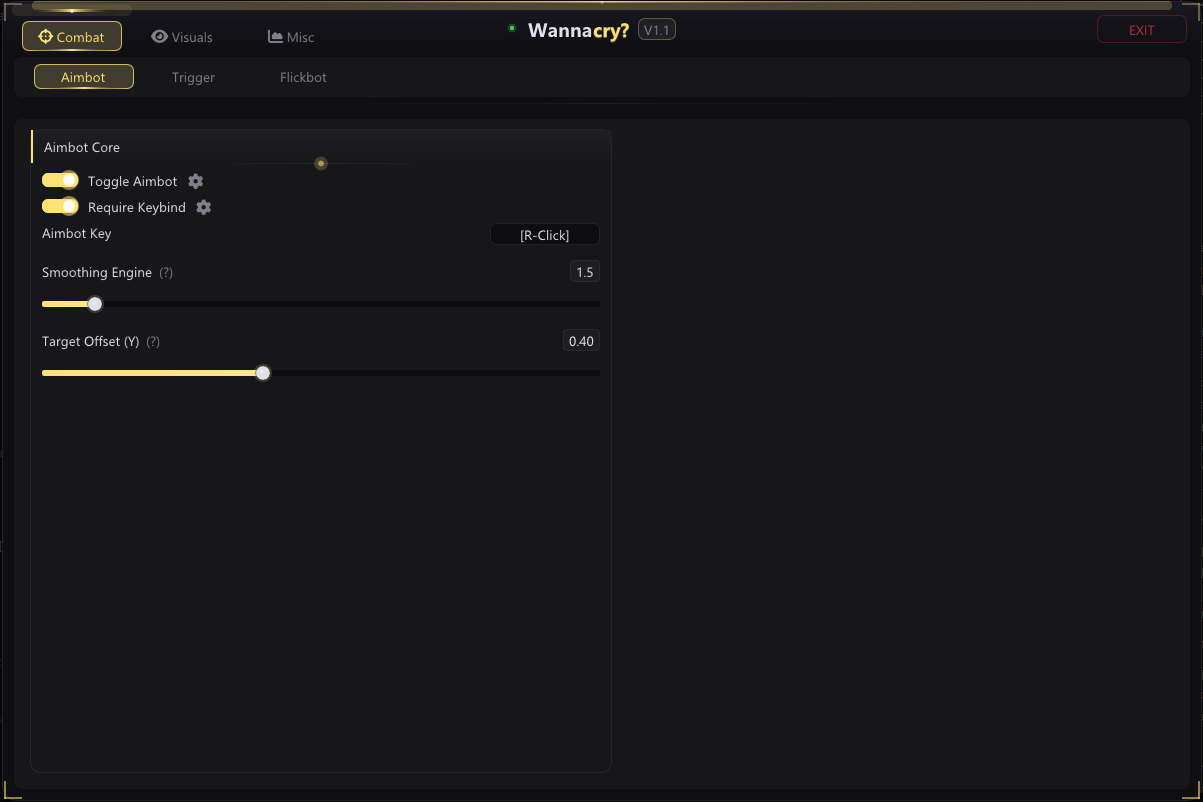
    Overwatch C++ Colorbot

    Fully external, GPU-accelerated automation with zero memory interaction. DXGI desktop duplication, a custom HLSL compute shader, hardware-level input.

    C++HLSLDXGIKMBox
    Read case →
  4. 2024 — live, 200+ users

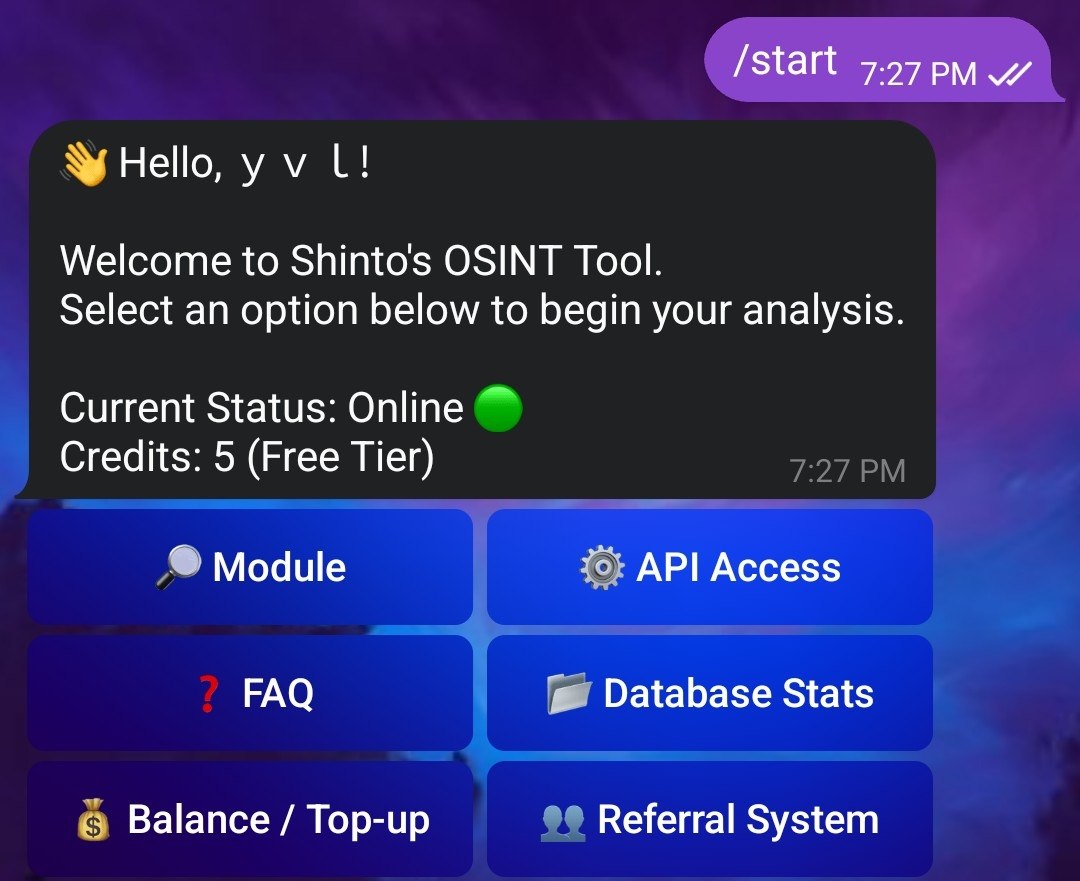
    Intel's OSINT Telegram Bot

    A full OSINT platform delivered as a Telegram bot: breach search, network recon, threat intel, forensics. One command-driven interface, a credit system, and a public REST API.

    PythonTelegramRESTOSINT
    Read case →

In flight — engineering only, no ship yet.

  1. In development

    Custom AMD SVM hypervisor

    A minimal Type-1 hypervisor loaded as a UEFI application. The guest is the caller itself, so the OS boots straight under our control. Live bring-up: VMCB configuration, 512 GiB identity-mapped NPT, MSR and I/O permission maps, VMRUN dispatch.

    Arch
    AMD-V (SVM), NPT
    Env
    UEFI, EDK II, MSVC
    Scope
    Bring-up, VM-exit, NPT identity
    Read case →
  2. In development

    Custom KeyAuth engine

    A from-scratch, self-hosted licensing and auth backend. Server-authoritative trust, no recoverable secrets in the client, and signed replay-proof responses that kill the classic "fake-server emulator" crack. Go server, C++ SDK on Ed25519 via TweetNaCl.

    Server
    Go, SQLite, Ed25519
    Client
    C++ SDK, TweetNaCl, HWID
    Threat
    Documented model, honest limits
    Read case →

Four domains, one workflow.

Most commissions sit at the seam between two of these. The interesting work usually lives in the friction.

Low-level systems and memory work

Kernel-adjacent code, anti-analysis stacks, hardware-input pipelines. The fragile, undocumented surfaces most projects route around. Trace tools, kernel debuggers, raw syscalls. I lean in here.

Stack C++17Win32Driver-adjacent

Computer vision

Custom-trained detection models, hand-labelled in-house datasets, real-time GPU inference end to end.

Stack HIP / ROCmONNXPython

External tooling

Game-side automation that never touches the game process. Capture, compute, hardware input, and anti-analysis where it matters.

Stack DXGIHLSLKMBox
Seen in Sair Colorbot

OSINT and utilities

Investigation platforms, breach search, internal command-driven tooling. The unglamorous infrastructure that keeps everything else moving.

Stack PythonTelegramREST
Seen in Intel Bot

Built slowly,
on purpose.

No frameworks of the week. Three primary languages, one operating-system layer, and a long debugger session for everything else.

Every project here started as a stubborn personal itch. Sair began as wanting to see if memory work could be done without ever touching a write. Colorbot was a Saturday project to learn HLSL. The OSINT bot happened because nobody else's tooling did what I needed.

The work is patient. I read the disassembly, I trace one frame end to end, I write the smallest test that reproduces it, I fix the smallest thing that explains it. The code is rarely glamorous. The compounding is.

If your problem looks like one of mine, the contact button is below.

How a commission runs.

Small, direct, and honest about scope. You talk to the person writing the code, start to finish.

  1. 01

    Scope

    A short call or thread. I tell you plainly whether it is buildable, roughly how long, and where the risk sits. No sales pitch.

  2. 02

    Build

    Fixed milestones, working builds you can run, and a running thread. You see the disassembly-level detail if you want it.

  3. 03

    Deliver

    Signed binaries, full source where the deal includes it, a short technical writeup, and a window for fixes after handover.

+ Good fit
  • +Windows systems and memory work others call too fragile
  • +Custom computer-vision detection, trained on your data
  • +External automation with real anti-analysis needs
  • +OSINT and internal tooling built to actually be maintained
Not a fit
  • Anything aimed at fraud, harassment, or real-world harm
  • Rush jobs where correctness is negotiable
  • Work I cannot test or verify end to end
  • Frameworks-of-the-week web builds, not my lane

What's next.

Two lines currently in the pipeline. Details when there are details.

  1. Planned
    Universal Colorbot Cross-game vision engine, Valorant first. Generalises the Globality AI pipeline into a game-agnostic detector.
  2. Research
    HWID Spoofer Low-level driver work. Quiet phase.

Start a project.

Commission work, source requests, or just to talk about low-level stuff. I read every message.

globality:~$ type help for commands, or just say hi
globality:~$